

Kids ask: Sedimentary Rocks - Nature’s Time Machines
Geology, mud, fossils & Earth’s history for kids (ages 3–11)
Links to Listen: Spotify, Apple Podcasts, More platforms
Submit questions for episodes here.
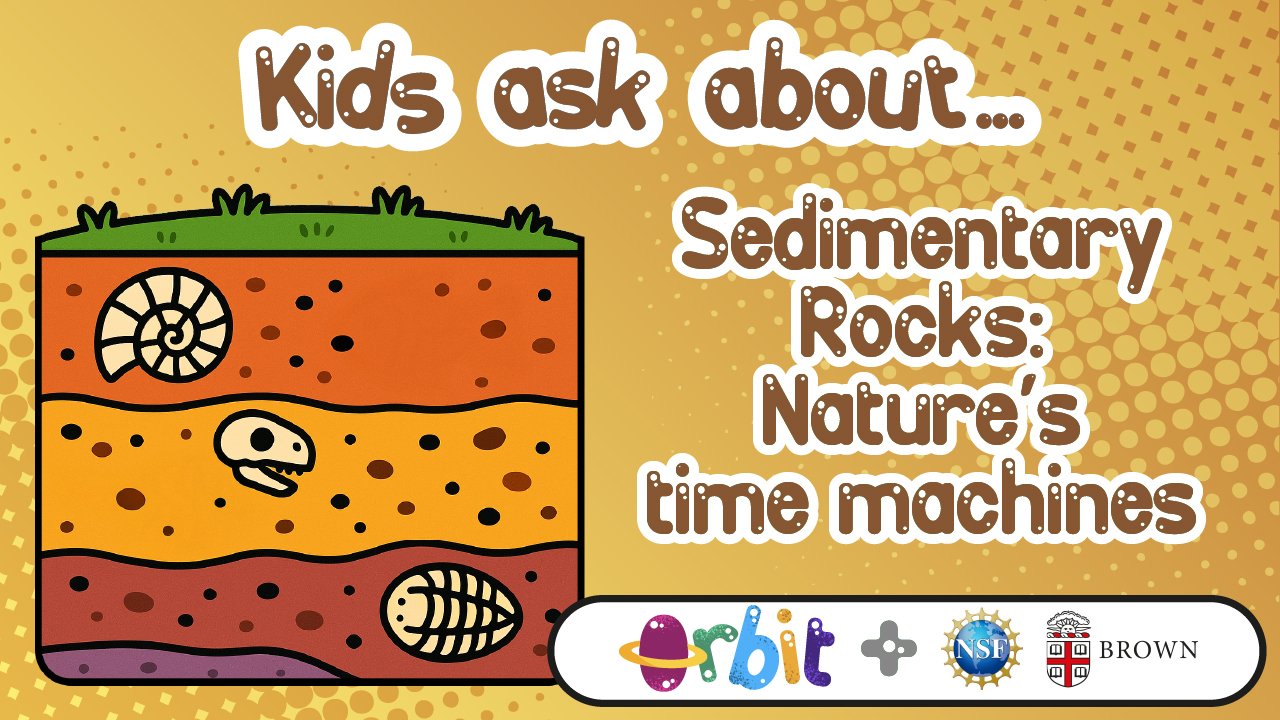
In this mystery-filled episode of Orbit: Science for Kids on the Move, kids explore rocks, mud, and Earth’s history with Dr. Lina Perez-Angel, a geoscientist at Brown University.
Through playful storytelling and real questions from kids, listeners learn what makes plants alive, how they grow, and how they make their own food using photosynthesis. Charlie explains how plants produce the oxygen we breathe, why they’re essential to everyday life (from food to clothing!), and how different plant parts—like roots, stems, and leaves—work together.
This episode introduces foundational biology concepts in an engaging way, helping kids understand how living things function, how plants support life on Earth, and how scientists study the natural world.
Episode Vocabulary
Build science language while you listen!
Sediment: Tiny pieces of rock, minerals, or living things moved by water, wind, ice, or gravity
Weathering: The process of rocks breaking into smaller pieces
Erosion: The movement of sediment from one place to another
Deposition: When sediment settles in a new place
Sedimentary Rock: Rock formed when layers of sediment are pressed and stuck together over time
Pressure: A force that pushes down on something
Layers: Different levels of sediment built up over time
Lithification: The process of sediment turning into rock
Sediment Core: A long tube of layered sediment collected by scientists
Geoscientist: A scientist who studies Earth, rocks, and natural processes
Children’s questions in this episode
Submit questions for upcoming episodes here.
What is sediment?
How do sediments form?
Where can sediments be found?
How do sediments turn into sedimentary rocks?
What is pressure and how does it affect rocks?
Where can we see sedimentary rocks in real life?
Why do sedimentary rocks have layers?
How do scientists use rocks to study Earth’s history?
What tools and technology do geologists use to study rocks?
What can rocks tell us about ancient climates?
Why is it important to study Earth’s history?
What jobs study rocks and sediment?
After listening: conversation starters
Where have you seen rocks or layers in nature before?
If you found a rock, what clues would you look for?
What do you think about Dr. Lina’s job as a geoscientist? Does that sound fun or interesting?
About the expert
Dr. Lina Perez-Angel is a geoscientist at Brown University who studies rocks and sediments to understand how Earth’s climate has changed over millions of years. She’s also founder of the science communication platform GeoLchat.
Why STEM Podcasts for Kids?
Research shows that podcasts like Orbit: Science for kids on the move! help kids build early STEM identity while sparking curiosity and imagination about the world around them. By hearing real experts and big questions, children begin to see themselves as scientists.
They also offer engaging, screen-free entertainment—perfect for car rides and on-the-go learning—while growing science vocabulary, strengthening critical thinking, and introducing kids to real-world STEM careers in a fun, accessible way.