

Why do hurricanes spin?
The Amazing Science Behind Earth's Biggest Storms
In Orbit: Science for Kids on the Move! | For curious kids ages 3–11
Listen on Spotify (LINK) or Apple Podcasts (LINK), or choose your favorite platform (LINKS)
This episode is made possible thanks to the National Academies of Sciences, Engineering, and Medicine Gulf Research Program (Grant # SCON-10001601) and Dr. Ayça K. Fackler from the University of Missouri.
Why do hurricanes have names? Why do they spin? And what is the mysterious "eye" at the center of these giant storms?
In this episode of Orbit: Science for Kids on the Move!, meteorologist Steve Lavoie from the National Weather Service helps answer kids' biggest questions about hurricanes. Together, we explore how hurricanes form over warm oceans, why they can become so powerful, and how scientists track them to help keep people safe. Along the way, kids discover why hurricanes, typhoons, and cyclones are actually the same type of storm, learn about the biggest hurricane ever recorded, and find out what families can do to prepare for severe weather.
Vocabulary and Concepts from the Episode
Hurricane: A giant rotating storm that forms over warm ocean water.
Meteorologist: A scientist who studies weather and forecasts future weather conditions.
Eye: The calm, often clear center of a hurricane.
Eyewall: The ring of intense thunderstorms surrounding the eye.
Low Pressure System: An area where air moves inward toward the center.
Humidity: Water vapor in the air.
Tropical Storm: A developing tropical cyclone that has become strong enough to receive a name.
Equator: An imaginary line around the middle of Earth that divides the Northern and Southern Hemispheres.
Coriolis Effect: The effect caused by Earth's rotation that helps hurricanes spin.
Storm Surge: A rise in ocean water pushed inland by a hurricane.
The Science Behind the Episode
Hurricanes are enormous weather systems made up of many thunderstorms working together. They form over warm ocean waters, where they draw energy from heat and moisture rising into the atmosphere.
One reason hurricanes exist is because Earth is constantly trying to balance temperatures around the planet. Warm tropical regions receive much more sunlight than the colder polar regions. Hurricanes help move heat and moisture away from the tropics toward higher latitudes.
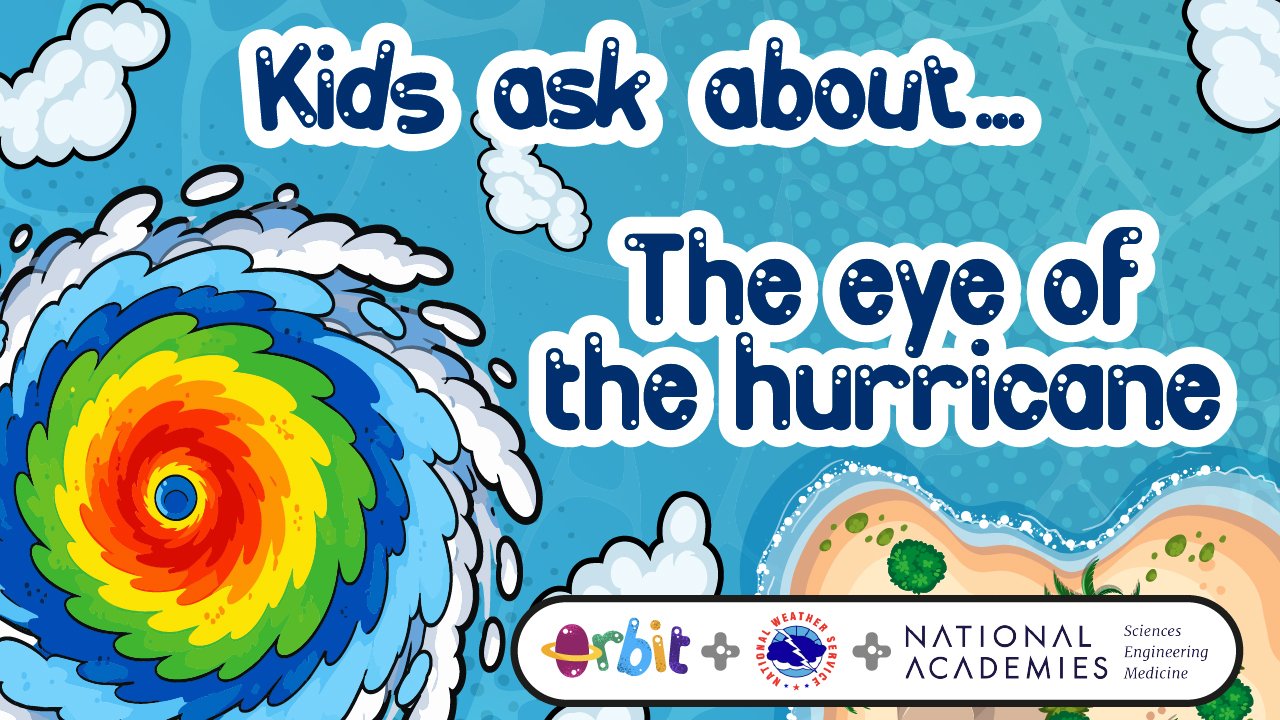
One of the most recognizable features of a hurricane is its eye. While powerful winds and thunderstorms rage around it in the eyewall, the eye itself is often calm and relatively clear. This happens because air is sinking downward in the center instead of rising upward into storm clouds.
Kids also learn that hurricanes spin because Earth spins. In the Northern Hemisphere, hurricanes rotate counterclockwise, while in the Southern Hemisphere they rotate clockwise. This difference is caused by the Coriolis Effect, a result of Earth's rotation.
What Your Child Will Learn
Why hurricanes form over warm ocean water.
How hurricanes help move heat around our planet.
Why hurricanes have an eye and an eyewall.
Why hurricanes spin in different directions depending on where they form.
How tropical storms receive their names.
What happens when hurricanes move over land.
How meteorologists predict hurricanes and help communities stay safe.
Important ways families can prepare for severe weather.
Big Questions About Hurricanes
What is a hurricane?
A hurricane is a large rotating storm system made up of many thunderstorms that forms over warm ocean water.
Why do hurricanes have names?
Storms receive names after they strengthen into tropical storms. Meteorologists use predetermined lists of names to make it easier to track and communicate about storms.
Why is there a hole in the middle of a hurricane?
The center of a hurricane is called the eye. Air sinks there instead of rising, which often creates calmer weather and clearer skies.
Why do hurricanes spin?
Hurricanes spin because Earth rotates. This creates the Coriolis Effect, which influences the movement of air around the storm.
Are hurricanes, typhoons, and cyclones different?
No. They are all the same type of storm. The name depends on where in the world the storm forms.
What happens when a hurricane reaches land?
Without warm ocean water to fuel it, the hurricane begins to weaken. However, it can still cause flooding, strong winds, and tornadoes far inland.
How can families stay safe during a hurricane?
Having an emergency plan, preparing supplies, following weather forecasts, and listening to local authorities can help keep families safe.
About the Expert
Steve Lavoie is a meteorologist with the National Weather Service in Columbia, South Carolina. He studies weather, forecasts storms, and helps communities prepare for severe weather events. Steve became interested in weather as a young child after experiencing a hurricane and has dedicated his career to helping protect lives and property through weather science.
Why Listen to Orbit?
Weather is one of the easiest ways for kids to connect science to everyday life. Whether they're watching clouds, hearing thunder, or seeing a weather forecast, children naturally have questions about how the atmosphere works.
Episodes like this help families explore those questions together while building science vocabulary and confidence. Kids hear directly from real meteorologists, learn how scientists solve real-world problems, and discover that science isn't just something that happens in a classroom—it's happening all around them every day.
Orbit: Science for Kids on the Move! helps curious kids ages 3–11 explore the world through real experts, kid questions, and screen-free adventures that spark curiosity, learning, and family conversations.