

How Air Conditioners Changed the World
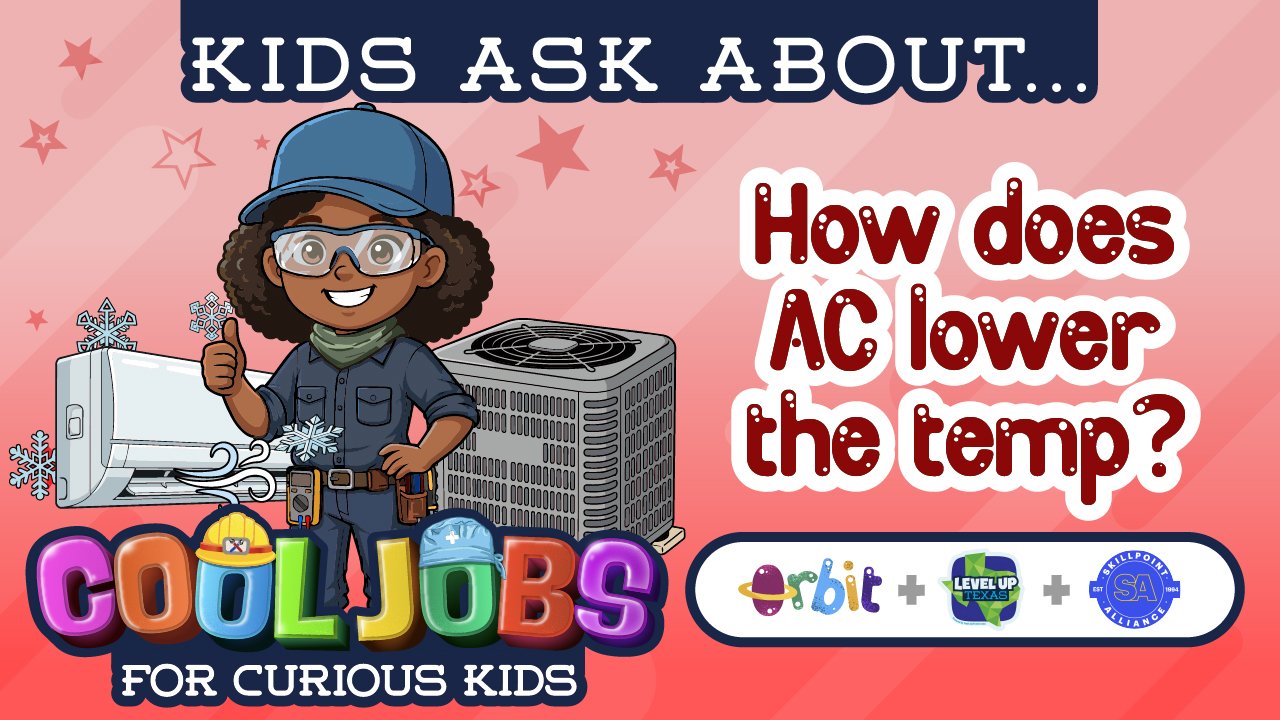
The Cool Science Behind Air Conditioning for Kids (ages 3–11)
🎧 Listen on Spotify (LINK), on Apple Podcasts (LINK), or choose your favorite platform (LINKS).
🤝 This episode is possible thanks to Level Up Texas, powered by Texas A&M University.
This episode is part of the “Cool Jobs for Curious Kids” series exploring STEM careers and the science behind the jobs that help keep our communities running.
Have you ever wondered how an air conditioner makes a hot room feel cool? Or who invented air conditioning in the first place?
In this episode of Orbit: Science for Kids on the Move!, HVAC instructor John Vernon helps kids discover the surprising science behind air conditioning. Along the way, listeners learn that air conditioners don't actually create cold air—they move heat from one place to another using a special chemical called refrigerant.
Kids also discover how air conditioning changed the world, why HVAC technicians are expert problem-solvers, and how one invention helped make homes, schools, hospitals, and cities more comfortable.
Vocabulary and Concepts from the Episode
Air Conditioning: A system that moves heat to make indoor spaces more comfortable.
Heat: A form of energy that naturally moves from warmer places to cooler places.
Refrigerant: A special chemical that absorbs and carries heat.
Compressor: A machine that squeezes refrigerant so it can release heat.
Thermostat: A device that controls the temperature of a heating or cooling system.
HVAC Technician: A skilled professional who installs and repairs heating and cooling systems.
Diagnose: To figure out what is causing a problem and how to fix it.
The Science Behind the Episode
Many people think air conditioners create cold air, but that's not actually how they work. Instead, they move heat from inside a building to the outdoors. Scientists often think of "cold" as simply having less heat.
A special chemical called refrigerant acts like a sponge for heat. As warm air passes over cold coils, the refrigerant absorbs heat and carries it outside. A compressor then squeezes the refrigerant, allowing the heat to be released outdoors before the cycle begins again.
This simple process powers air conditioners, refrigerators, freezers, and many other cooling technologies we use every day. The same basic science has been helping people stay cool for more than 100 years.
What Your Child Will Learn
Why air conditioners don't actually create cold air.
How refrigerant absorbs and carries heat.
What compressors, coils, fans, and thermostats do.
How Willis Carrier invented modern air conditioning.
How air conditioning changed homes, schools, hospitals, and cities.
What HVAC technicians do every day.
How technicians diagnose problems and repair systems.
Why skilled trades are important STEM careers.
Big Questions About Air Conditioning
What is air conditioning?
Air conditioning means treating the air to make people more comfortable by moving heat.
Do air conditioners create cold air?
No. They remove heat from indoor air and move it outside.
What is refrigerant?
Refrigerant is a special chemical that absorbs heat and carries it through the air conditioning system.
What does a compressor do?
A compressor squeezes refrigerant so it can release the heat it collected.
Who invented air conditioning?
Engineer Willis Carrier invented modern air conditioning in 1902 while solving a problem at a printing factory.
How do HVAC technicians figure out what's wrong with an air conditioner?
They diagnose problems step by step, testing different parts of the system until they find the cause.
About the Expert
John Vernon is a heating and air conditioning instructor with Skillpoint Alliance in Midland, Texas. He teaches students how air conditioners and refrigerators work and helps prepare future HVAC technicians through hands-on skilled trades training programs.
Why STEM Podcasts for Kids?
Some of the most interesting science is hidden inside technologies children use every day. Air conditioning is a perfect example. Most kids enjoy cool air on a hot day, but few know the fascinating science happening behind the vents and walls.
This episode also introduces children to skilled trades careers. STEM isn't only about scientists and engineers—it's also about technicians, builders, electricians, and other problem-solvers who use science and technology to improve people's lives every day.
About Orbit: Science for Kids on the Move!
Orbit: Science for Kids on the Move! is a science podcast for curious kids ages 3–11 featuring real experts, kid questions, and fun storytelling.
Each episode helps children explore animals, weather, space, technology, engineering, the human body, and the natural world while building curiosity, science vocabulary, and confidence in learning.
Perfect for:
Car rides
Quiet time at home
Screen-free afternoons
Family activities
More from Cumbre Kids
Looking for more screen-free audio adventures for your family?
🌙 Buenas Noches, Cráneo: Historias para dormir (Español)
A calming Spanish-language bedtime podcast that helps children wind down through gentle stories, relaxing sounds, and imaginative adventures.
🧬 Cráneo: Ciencia para niños curiosos (Español)
Our Spanish-language science podcast where curious kids explore the world through questions, storytelling, and conversations with real scientists and experts.
Explore all of our family podcasts at: LINK