

Kids ask: Do all bees sting?
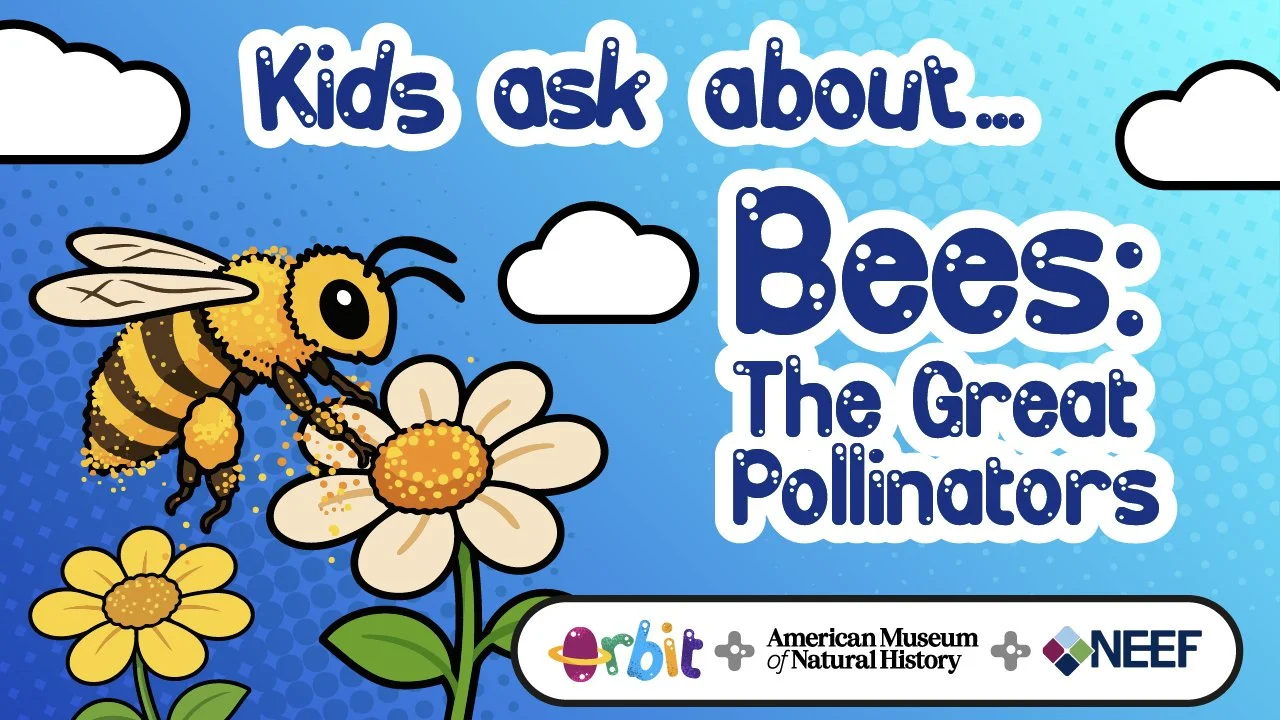
The critical role of bees in pollination! (Earth Day science for kids ages 3–11)
Links to Listen: Spotify, Apple Podcasts, More platforms
Bee and Earth Day activities from the National Environmental Education Foundation
Submit questions for episodes here.
In this special Earth Day episode of Orbit: Science for Kids on the Move, kids explore the world of bees and pollination with Dr. Laura González Mozo, an entomologist at the American Museum of Natural History.
Through real questions from kids and fun, hands-on examples, listeners learn how bees move pollen from flower to flower, helping plants grow fruits and seeds. Dr. Laura explains why bees are essential for ecosystems and food production—and what might happen if they disappeared.
This episode introduces key biology and environmental science concepts while helping kids understand the importance of protecting pollinators and how small actions—like planting flowers—can make a big difference for our planet.
Episode Vocabulary
Build science language while you listen!
Bee: An insect that collects nectar and pollen and helps plants reproduce
Pollination: The process of moving pollen from one flower to another so plants can make seeds
Pollen: A powder made by flowers that contains genetic material for reproduction
Nectar: A sweet liquid in flowers that attracts pollinators like bees
Pollinator: An animal that helps move pollen between flowers
Invertebrate: An animal without a backbone
Anther: The part of a flower that produces pollen
Stigma: The sticky part of a flower where pollen lands
Ovary (plant): The part of a flower where seeds and fruit develop
Larva: A baby insect
Children’s questions in this episode
Submit questions for upcoming episodes here.
What is a bee?
How many types of bees are there?
Why are bees important for life on Earth?
Why do bees sting, and do they die after stinging?
Why do bees buzz?
What is pollen?
What is pollination?
What parts of a flower are involved in pollination?
What is a pollinator?
How do bees pollinate flowers?
Do bees eat pollen or nectar?
Why are bees disappearing?
How can kids and families help protect bees?
What jobs study bees and pollination?
After listening: conversation starters
Why do you think bees are so important for our food?
What would happen if there were no bees?
What could we plant to help bees in our area?
About the expert
Dr. Laura González Mozo is an entomologist at the American Museum of Natural History who studies insects and helps people understand why pollinators like bees are essential for our planet.
Why STEM Podcasts for Kids?
Research shows that podcasts like Orbit: Science for kids on the move! help kids build early STEM identity while sparking curiosity and imagination about the world around them. By hearing real experts and big questions, children begin to see themselves as scientists.
They also offer engaging, screen-free entertainment—perfect for car rides and on-the-go learning—while growing science vocabulary, strengthening critical thinking, and introducing kids to real-world STEM careers in a fun, accessible way.