

Why do American bison live in herds?
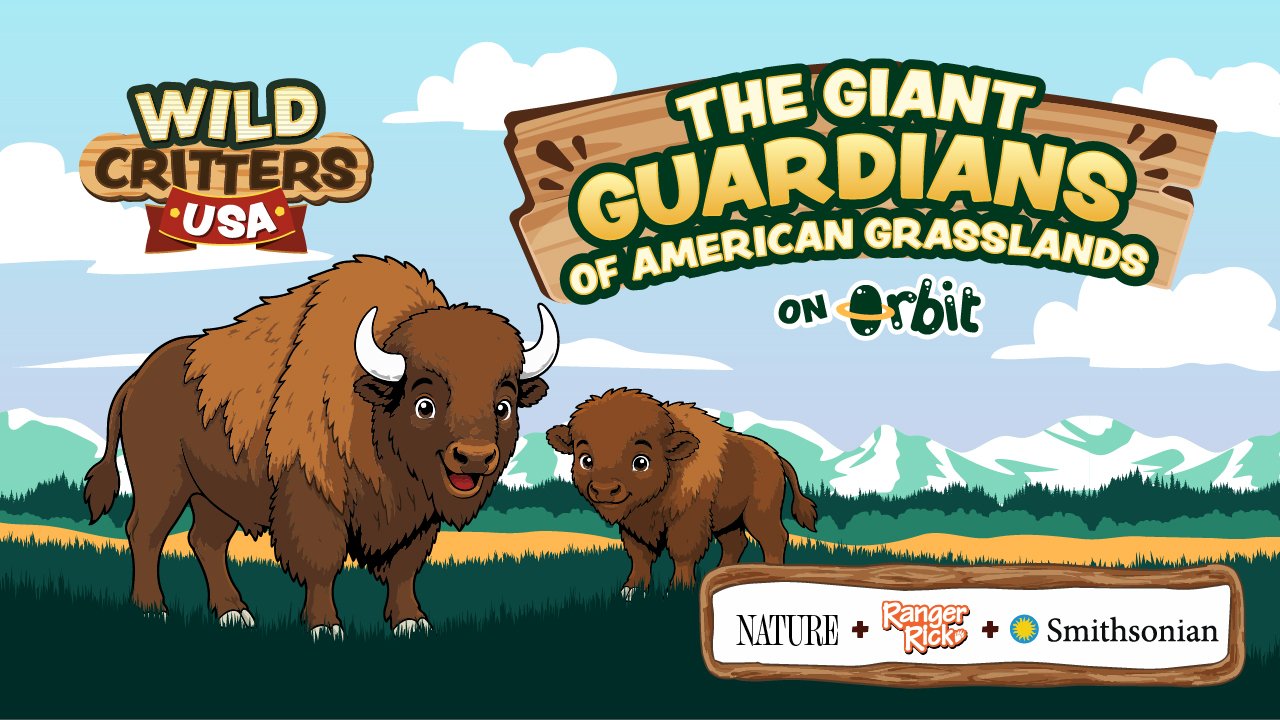
Meet the giant grassland engineers of North America
In Orbit: Science for Kids on the Move! | For curious kids ages 3–11
🎧 Listen on Spotify (LINK), on Apple Podcasts (LINK), or choose your favorite platform (LINKS).
🤝 This episode is part of Wild Critters USA, a collaboration between Orbit, PBS Nature, and the National Wildlife Federation.
Did you know that American bison help prevent grasslands from turning into forests by body-slamming young trees? And that they once lived in herds so enormous they stretched all the way to the horizon?
In this episode of Orbit: Science for Kids on the Move!, we travel to the grasslands of Montana with Dr. Andy Boyce, a Research Ecologist at the Smithsonian National Zoo and Conservation Biology Institute. Discover why bison live in herds, how they protect themselves from predators, and why scientists call them a keystone species.
Along the way, kids learn how these giant mammals help shape entire grassland ecosystems simply by grazing, digging, dust bathing, scratching, and being their big, fluffy, hungry selves.
Vocabulary and Concepts from the Episode
Bison: The largest land mammal in North America.
Prairie: A grassland ecosystem with few trees.
Mammal: An animal with hair or fur that feeds milk to its babies.
Predator: An animal that hunts and eats other animals.
Herd: A group of animals that live and travel together.
Keystone Species: A species that plays an especially important role in its ecosystem.
Ecologist: A scientist who studies how living things interact with one another and their environment.
The Science Behind the Episode
American bison once roamed across much of North America in herds numbering in the millions. Today, conservationists, scientists, and Native American tribes are working to restore bison to parts of their historic range.
Bison are often called a keystone species because they help create and maintain healthy grasslands. As they graze, they create areas with different grass heights that support many kinds of wildlife. Their wallows can collect water for amphibians, their fur helps birds build nests, and their grazing helps prevent grasslands from becoming forests.
Without bison, many grassland plants and animals would struggle to survive. By protecting bison, people are also helping protect one of North America's most important ecosystems.
What Your Child Will Learn
What makes a bison a mammal.
Why bison live in herds.
How bison defend themselves from predators.
What bison eat and how large they can grow.
Why grasslands need grazing animals.
What a keystone species is.
How bison help other animals survive.
How scientists and conservationists are helping restore bison populations.
Big Questions About American Bison
What is an American bison?
The American bison is the largest land mammal in North America and a native grazer of grassland ecosystems.
Why do bison live in herds?
Living in herds helps protect bison from predators and allows them to learn from one another.
What do bison eat?
Bison mostly eat grasses, but they can also eat flowers and other plants.
What animals hunt bison?
Wolves and grizzly bears are the primary predators of bison.
Why are bison important to grasslands?
Their grazing, digging, wallowing, and even scratching help create habitats for many other species.
What is a keystone species?
A keystone species is an organism that has a large impact on its ecosystem. When it disappears, many other species are affected too.
About the Expert
Dr. Andy Boyce is a Research Ecologist with the Smithsonian’s National Zoo and Conservation Biology Institute. He studies grassland ecosystems and the animals that live in them, including bison and grassland birds. His work helps scientists understand how healthy grasslands support wildlife and biodiversity.
Why STEM Podcasts for Kids?
Animals are often a child's first introduction to science. Through the story of the American bison, kids can explore ecology, conservation, animal behavior, and the interconnected relationships that make ecosystems work.
Episodes like this also help children discover STEM careers they may not know exist. Dr. Andy's work as an ecologist shows how scientists study nature, solve environmental challenges, and help protect wildlife for future generations.
About Orbit: Science for Kids on the Move!
Orbit: Science for Kids on the Move! is a science podcast for curious kids ages 3–11 featuring real experts, kid questions, and fun storytelling.
Each episode helps children explore animals, weather, space, technology, engineering, the human body, and the natural world while building curiosity, science vocabulary, and confidence in learning.
Perfect for:
🚗 Car rides
🏡 Quiet time at home
📵 Screen-free afternoons
🌎 Family adventures
🎒 Learning on the go
More from Cumbre Kids
Check out Cumbre Kids’ podcasts in Spanish!
🌙 Buenas Noches, Cráneo: Historias para dormir (Español)
A calming Spanish-language bedtime podcast that helps children wind down through gentle stories, relaxing sounds, and imaginative adventures.
🧬 Cráneo: Ciencia para niños curiosos (Español)
Our Spanish-language science podcast where curious kids explore the world through questions, storytelling, and conversations with real scientists and experts.
Explore all of our family podcasts at: LINK