

Why are alligator moms so awesome?
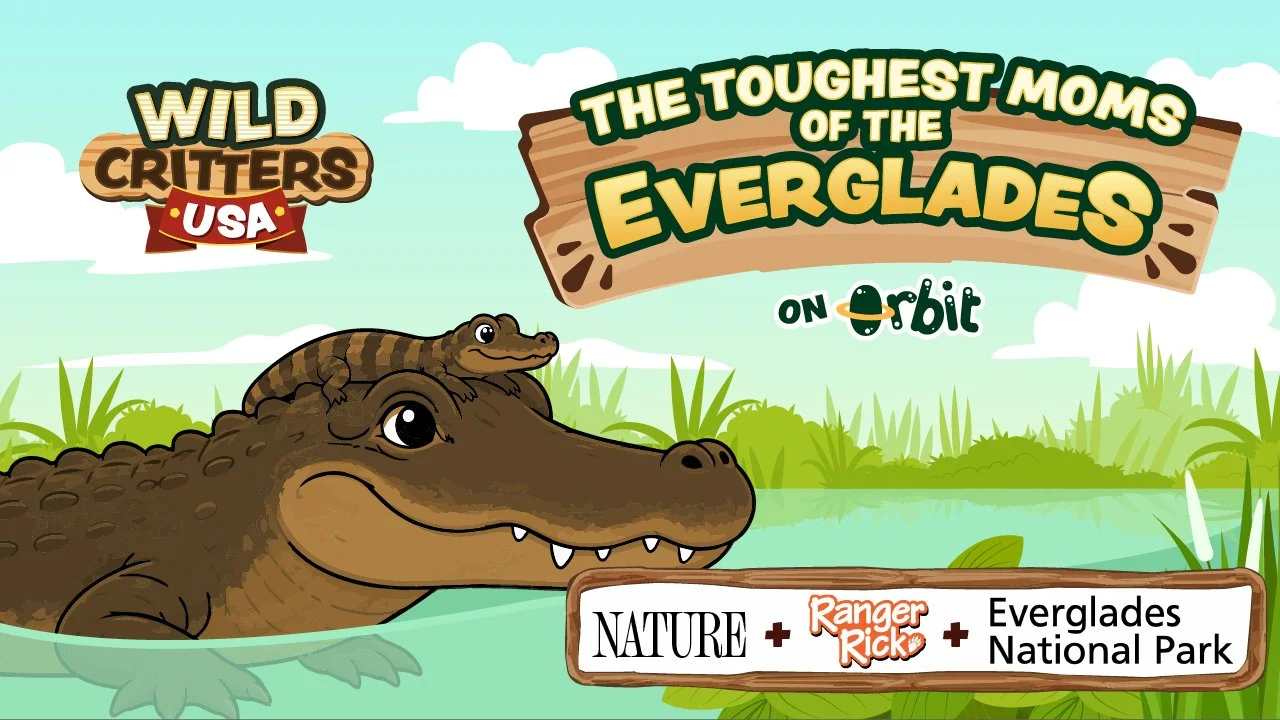
A wildlife episode with the U.S. National Park Service or kids 4-11 years old
🎧 Listen on Spotify (LINK), on Apple Podcasts (LINK), or choose your favorite platform (LINKS).
🤝 This episode is part of Wild Critters USA, a collaboration between Orbit, PBS Nature, and the National Wildlife Federation.
Did you know that American alligator moms build nests, guard their eggs, carry their babies to the water, and come running when their little ones call for help?
In this episode of Orbit: Science for Kids on the Move!, we travel to Florida's Everglades National Park with Yvette Cano, Director of Education at Everglades National Park. Discover why alligators are one of the oldest groups of animals on Earth, how they survive in wetlands, and why scientists consider them ecosystem engineers.
Along the way, kids learn about baby alligator chirps, powerful alligator jaws, the famous Everglades, and how one animal can help an entire wetland ecosystem survive.
Vocabulary and Concepts from the Episode
Wetland: A place where land and water meet.
Everglades: The largest wetland in the United States, located in southern Florida.
Reptile: A group of animals that includes alligators, turtles, snakes, and lizards.
Cold-Blooded: An animal that relies on its environment to help regulate body temperature.
Habitat: The natural home of a plant or animal.
Ecosystem Engineer: An organism that changes its environment in ways that help other living things.
Gator Hole: A deep hole dug by an alligator that can hold water during the dry season.
The Science Behind the Episode
The Everglades is a vast wetland ecosystem that provides habitat for thousands of species and helps store, clean, and manage water. American alligators are one of the most important animals living there.
During Florida's dry season, alligators dig deep depressions called gator holes. These holes retain water when surrounding areas dry out, providing an important refuge for fish, birds, turtles, and many other animals. Because they create resources that help entire ecosystems survive, scientists often describe alligators as ecosystem engineers.
Alligator moms are also remarkable parents. They guard their nests, protect their hatchlings, and respond when baby alligators make distress calls. These behaviors help increase the survival chances of young alligators in a challenging environment.
What Your Child Will Learn
What wetlands are and why they are important.
Why the Everglades is a unique ecosystem.
How alligators survive in wetland environments.
How powerful an alligator's bite can be.
The differences between alligators and crocodiles.
Why alligator moms are such dedicated parents.
How gator holes help other animals survive.
How people worked to protect the Everglades.
Big Questions About American Alligators
What is an American alligator?
An American alligator is a large reptile that lives in freshwater wetlands, rivers, lakes, and swamps across the southeastern United States.
How big do alligators get?
Male alligators can grow up to about 13 feet long, even though they hatch at only about 6 inches long.
What do alligators eat?
Alligators eat fish, turtles, birds, and other animals they find in their habitat.
What's the difference between an alligator and a crocodile?
Alligators have broader, rounded snouts and usually live in freshwater. Crocodiles have narrower, pointier snouts and are more likely to live in saltwater or brackish habitats.
Why are alligator moms special?
They guard their nests, protect their babies, and quickly respond when young alligators call for help.
How do alligators help other animals?
They create gator holes that provide water and habitat for many species during the dry season.
About the Expert
Yvette Cano is the Director of Education at Everglades National Park. She helps visitors learn about one of the most important wetland ecosystems in North America and the many plants and animals that call it home. Her work helps connect families, students, and communities with the natural world through education and exploration.
Why STEM Podcasts for Kids?
Research shows that podcasts like Orbit: Science for kids on the move! help kids build early STEM identity while sparking curiosity and imagination about the world around them. By hearing real experts and big questions, children begin to see themselves as scientists.
They also offer engaging, screen-free entertainment—perfect for car rides and on-the-go learning - while growing science vocabulary, strengthening critical thinking, and introducing kids to real-world STEM careers in a fun, accessible way.