

Kids ask: Why Do We Sleep?
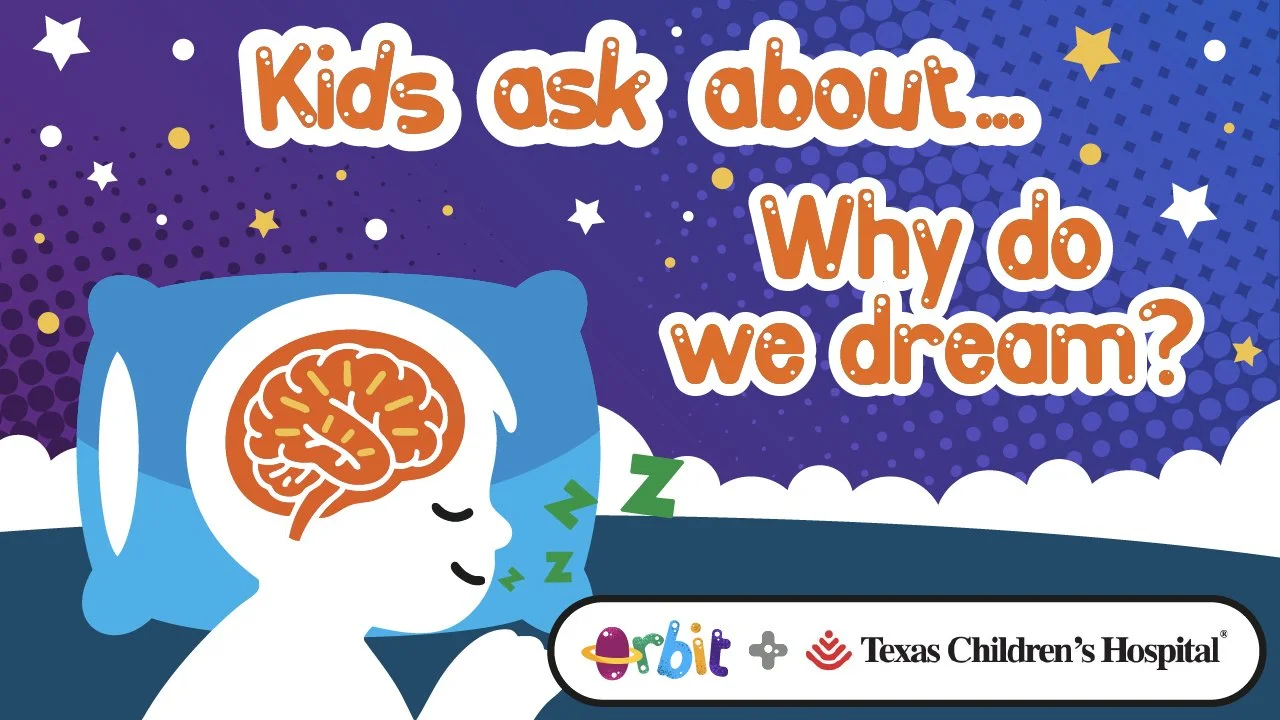
Exploring Dreams, Brain Power & Bedtime Science for Kids
Links to Listen: Spotify, Apple Podcasts, More platforms
Submit questions for episodes here.
In this fun and curiosity-filled episode of Orbit: Science for Kids on the Move, kids explore the science of sleep with Dr. Daniel Davila-Williams, a pediatric neurologist at Texas Children’s Hospital and professor at Baylor College of Medicine.
Through real questions from kids and playful storytelling, listeners learn what happens in the brain and body during sleep, why we dream, and how sleep helps us grow, learn, and feel our best.
This episode introduces foundational neuroscience concepts—like the brain’s “internal clock” (circadian rhythm), memory organization, and emotional processing—in a way that’s engaging and easy for ages 3–11 to understand. It also encourages kids to think like scientists by asking big questions about everyday experiences like dreaming and feeling tired.
Episode Vocabulary
Build science language while you listen!
Brain: The control center of your body that helps you think, move, and feel
Sleep: A special state where your body and brain rest and recharge
Circadian Rhythm: Your body’s internal 24-hour clock that tells you when to sleep and wake up
Melatonin: A hormone that helps your body feel sleepy
REM Sleep: A stage of sleep where your brain is very active and you dream
Neurologist: A doctor who studies the brain and nervous system
Dreams: Stories and images your brain creates while you sleep
Sleep Stages: Different phases of sleep your body goes through each night
Children’s questions answered in this episode
Submit questions for upcoming episodes here.
Why do we sleep?
Why do we feel tired at the end of the day?
What is the circadian rhythm (our internal clock)?
What happens to our brain and body while we sleep?
Why do we need darkness to fall asleep?
What is melatonin and how does it help us sleep?
Why doesn’t our body move while we’re sleeping?
What are the different stages of sleep?
What is REM sleep and why do we dream?
Why do we dream?
Why do some dreams feel scary (nightmares)?
What happens if we don’t get enough sleep?
How do scientists study sleep?
Why do some people sleepwalk or talk in their sleep?
After listening: conversation starters
Have you ever noticed what happens when you don’t sleep well?
How can our family improve our sleep?
Do you remember any dreams recently?
About the expert
Dr. Daniel Davila-Williams (website) is a pediatric neurologist at Texas Children’s Hospital and an Assistant Professor of Pediatric Neurology & Developmental Neuroscience at Baylor College of Medicine. He also serves as the Medical Director of the Pediatric Stroke Center and sees patients in the Neurology, Epilepsy Center and Pediatric Stroke Clinic.
Why STEM Podcasts for Kids?
Research shows that podcasts like Orbit: Science for kids on the move! help kids build early STEM identity while sparking curiosity and imagination about the world around them. By hearing real experts and big questions, children begin to see themselves as scientists.
They also offer engaging, screen-free entertainment—perfect for car rides and on-the-go learning—while growing science vocabulary, strengthening critical thinking, and introducing kids to real-world STEM careers in a fun, accessible way.